OUR SERVICES
Fourteen Services We Offer throughout DFW and Nationwide
Commercial roofing, waterproofing and building-envelope services designed to protect occupied properties, control long-term costs and keep operations moving.
NUMBERS THAT MATTER
205
COMBINED YEARS - LEADERSHIP & FIELD SUPERVISION
$300M+
INSTALLED OVER OUR LEADERSHIP'S CAREERS
NATIONAL
OPERATING REACH
25-80
Seasonal Workforce
WHAT WE DO
What we install, repair, and maintain.
From emergency response to long-term asset management — these are the capabilities that make AVID an operator, not just a contractor.
OUR CORE SERVICES
Every one of them documented daily and warrantied by the team that walked your roof on day one.
01 - 24/7 LIVE DISPATCH
24/7 Emergency Service
Storm damage, active leaks, failed flashings. The line is answered by a person authorized to dispatch.
- > Storm-driven leaks — 72-hour prioritized response time for service-contract clients
- > Mechanical failures, fires & smoke response
- > Priority response for service-contract clients
02 - IN-HOUSE FABRICATION
Architectural Sheet Metal
The edge metal is where most roofs fail first. We fabricate and install it in-house — same team, same schedule, same accountability as the membrane.
- > Copings, edge metal, through-wall flashings
- > ES-1 Compliant edge systems engineered for wind uplift
- > Custom architectural profiles, not catalog parts
03 - ANCHOR SERVICE
Commercial Roofing
TPO, PVC, modified bitumen, and metal systems installed to manufacturer specifications. Manufacturer-certified across every system we install
- > 60-mil TPO, PVC, EPDM, modified bitumen, metal
- > Certified: Sika, Siplast, Garland, Johns Manville + more
- > Installed on occupied buildings without shutting you down
04 - SINGLE-CONTRACT
Design-Build Reroof
The design-versus-install gap is where commercial roofs go wrong. We close it. Assessment, drawings, submittals, and installation — one contract, one accountable team.
- > No consultant fee on top of the install
- > Schedule compresses because design and build overlap
- > One warranty covers the whole assembly
05 - PORTFOLIO PROGRAM
Roof Asset Management
A roof with no maintenance program isn't saving money — it's deferring a bigger bill with no warning. We build a program that keeps both the warranty and the insurer happy.
- > Biannual inspections, GPS-tagged & documented
- > Multi-year capital plan for portfolio owners
- > 48-hour storm assessments on covered properties
06 - FULL ENVELOPE
Waterproofing & Restoration
Water doesn't only come through the roof. We handle the other half of the envelope — vertical walls, plaza decks, parking structures, and below-grade.
- > Tilt-wall and expansion joints, windows perimeters
- > Plaza decks, parking structures, below-grade walls
- > Restoration that extends life before capital replacement
WE PROVIDE ADDITIONAL SERVICES
Repair, coating, hail documentation, skylights, and drone inspection — each one done the same way as everything else: supervised, documented, and warrantied.
07
Drone Inspection
A drone sees the whole roof. A clipboard shows what the inspector walked. We use high-resolution orthomosaic and thermal imaging where it matters. The cheapest data you'll buy for a building you own.
- > High-resolution orthomosaic of every square foot
- > Thermal imagery to catch saturated insulation before failure
- > Annotated PDF you can hand to ownership or the adjuster
08
Hail Damage
Damage assessments are done by roofers, not adjusters. We document to meet insurance-industry standards so their claims have evidence to back them up, and we don't inflate what's here.
- > Drone imagery, hands-on field check, severity documentation
- > Reports built to insurance industry standards
- > Direct coordination with your adjuster
09
Roof Coating
When the roof has another decade in it, don't replace it — coat it. A correctly specified coating extends service life by 10- 15 years at roughly a third of the replacement cost.
- > Silicone, acrylic, polyurethane, liquid-applied membrane
- > Substrate must be sound - we'll confirm before recommending
- > Typically a maintenance expense, not a capital expenditure
10
Roof Maintenance
The roof that gets inspected twice a year outlasts the one that doesn't by a decade. We catch failed seams, clogged drains, and backing flashings before they become water events. Documented. Warrantied. On schedule.
- > No surprise repair bills from ignored deterioration
- > Manufacturer warranties stay valid with documented inspections
- > GPS-tagged photo record of every inspection, retained for warranty claims
11
Roof Repair
Most leaks are a seam, a penetration, or a flashing — not a failed roof. We find where the water is actually entering, not where the stain shows, and we fix that. If repair isn't the honest answer, we'll tell you.
- > Leak source traced by inspection, not assumption
- > Emergency dry-in available within 4 hours
- > Written scope and photos before any work begins
12
Roof Replacement
When repair no longer makes sense, replacement has to be done right the first time. We assess the deck, spec the system, install it, and back it with manufacturer warranties of up to 30 years. One project manager, start to finish.
- > Tear-off or recover determined by core cut — not assumption
- > System specified to your building, budget, and use
- > Manufacturer-certified installation on every reroof
13
Skylight Installation
Skylights bring light in. When done wrong, they bring water in, too. Most failures aren't the glass — they're the curb, the flashing, and the membrane integration. We treat it as a roofing problem first.
- > Single units, continuous runs, smoke events, egress hatches
- > Same crew handles skylight and roof - no transition gap
- > Replacement of failed legacy units with current code equivalents.
14
Waterproofing
The roof isn't the only place water gets in. Plaza decks, below-grade walls, balconies, parking structures — every surface above or below an occupied space is a waterproofing problem waiting to happen. We seal the whole envelope, not just the top.
- > Fluid-applied, sheet-applied, and crystalline systems
- > Below-grade, plaza deck, and facade applications
- > Phased installation around occupied buildings
NOT SURE WHAT YOU NEED?
Tells us about the building.
We'll tell you what it needs.
ROOFING SYSTEMS
Nine membrane systems. We install the right one, not the easiest one.
System selection is the single most important decision on a commercial roofing project. The wrong system fails early; the right one outlasts everything around it. Key benefits: durability, energy efficiency, fast installation, and low maintenance.
01 - SINGLE PLY
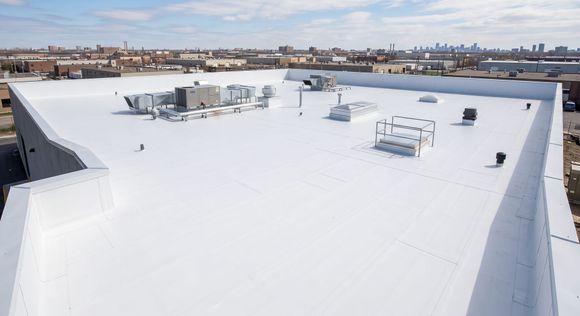
AVID Roofing & Waterproofing installs single-ply membranes on commercial flat and low-slope roofs. We use them because they're faster to install, cheaper to maintain, and outlast built-up asphalt systems.
02 - TPO
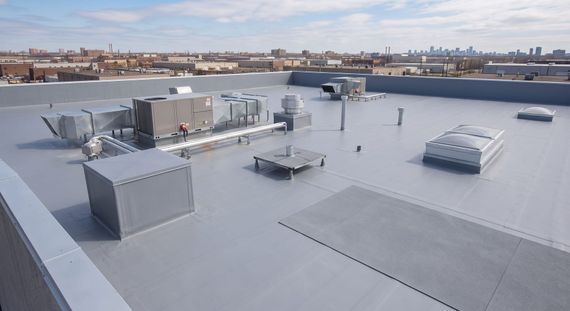
TPO is a single-ply membrane that reflects heat, which lowers cooling costs. Its heat-welded seams create a watertight seal, and it resists punctures, tears, and chemicals better than cheaper alternatives.
03 - PVC
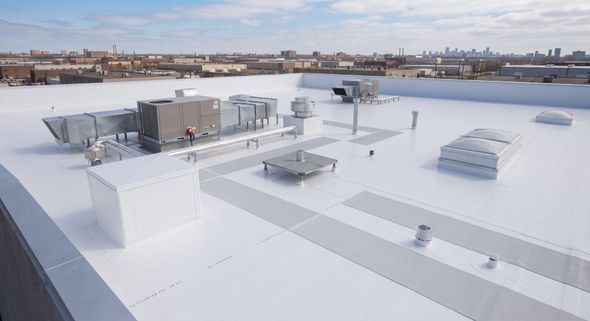
PVC is a premium single-ply membrane that resists fire, chemicals, oils, and animal fats. Use it in restaurants, manufacturing plants, and industrial buildings where TPO won't cut it.
04 - EPDM
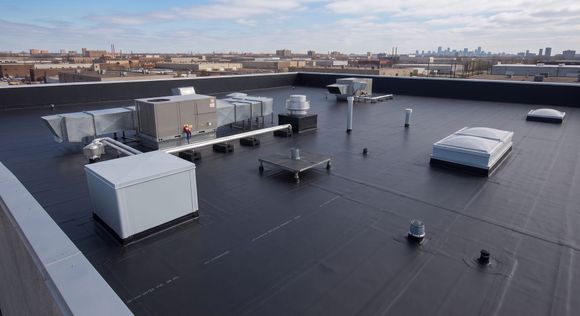
EPDM is a rubber membrane that flexes with temperature swings without cracking. It outlasts other single-ply options and handles UV, weather, and ozone exposure for 30+ years.
05 - BUILT-UP (BUR)
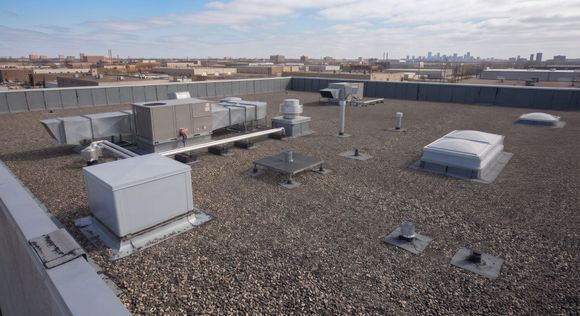
Built-up roofing is layers of felt and asphalt topped with gravel. It's thick and tough—takes a beating and lasts decades—but it's slower to install and repair than single-ply systems.
06 - METAL
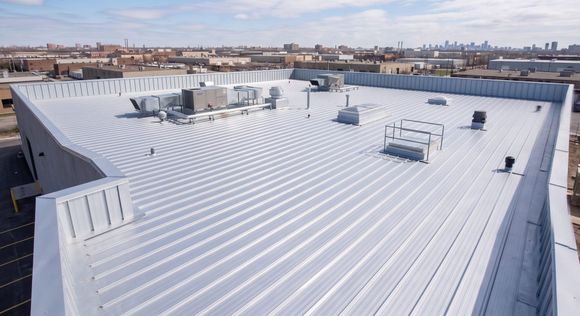
Metal roofing with standing-seam panels lasts 50+ years, withstands high winds, and sheds water with no maintenance. It costs more upfront, but you rarely touch it again.
07 - MODIFIED BITUMEN
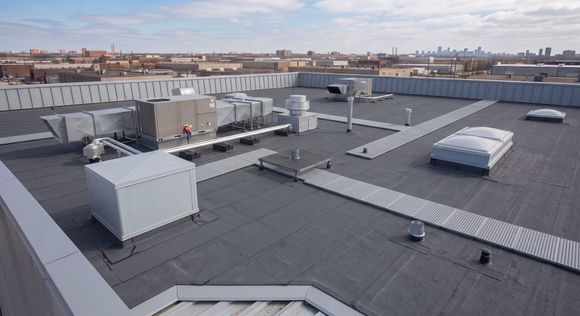
Modified bitumen is asphalt mixed with plastic or rubber, installed in 2-3 layers using heat, adhesive, or self-sticking sheets. It's the middle ground—tougher than single-ply, more flexible than built-up asphalt, and cheaper than metal.
08 - LIQUID APPLIED
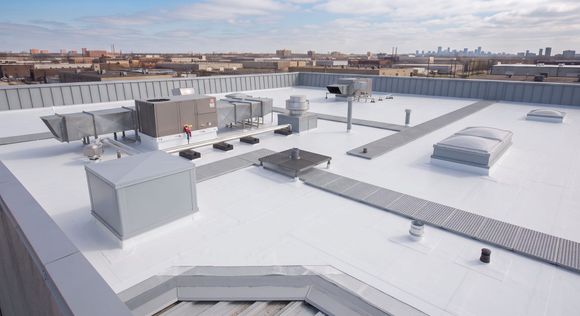
Liquid-applied roofing is sprayed or rolled on, cures into a seamless rubber-like membrane, and works on complex shapes and penetrations. No seams means no leak points—ideal for roofs with lots of vents, skylights, or irregular geometry.
09 - GREEN ROOFING
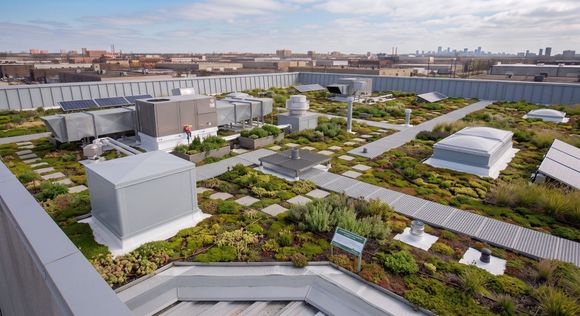
Green roofing adds soil and plants to your roof. It keeps the building cooler, handles stormwater runoff, and gives you an eco-friendly look—but it requires structural support and regular maintenance.
Fort Worth-based. Active across DFW and 13 states.
Our home market is the Dallas-Fort Worth metroplex. National accounts are run from the same Fort Worth office under master service agreements.
DALLAS METRO
FORT WORTH METRO
SOUTHERN / CENTRAL
SOUTHEAST
MIDWEST
MOUNTAIN / WEST
Commercial Roofing
Frequently Asked Questions:
Your roof needs replacement, not repair, if: (1) it's near or past its material's expected lifespan—most commercial roofs are 15–20 years depending on membrane type; (2) damage covers more than 25–30% of the roof surface; (3) repairs would cost more than 40% of replacement; or (4) the underlying structure is compromised, not just the surface. Repair makes sense for isolated damage—a few punctures, localized leaks, flashing failures—when the rest of the membrane has years left. The hard call is usually age + condition together: an old roof with scattered damage is a replacement candidate because each repair just delays the inevitable and multiplies your risk of failures spreading. That's why AVID offers drone inspection and asset assessment—you get an honest read on what you actually have and what it'll cost to maintain vs. replace, instead of guessing.
Commercial roof costs vary widely because they depend on material, square footage, and complexity. A TPO or EPDM reroof runs $3–$6 per square foot installed; PVC and multi-ply systems go $5–$8+. A 50,000 sq ft roof at $4/sq ft is $200K; at 100,000 sq ft it's $400K. Add tear-off, structural repairs, flashing details, or building occupancy logistics and costs climb fast. The real variable isn't material—it's your roof's condition and what has to happen underneath. An existing membrane you're coating? Cheaper. Removing three layers and finding rotted decking? Budget higher. AVID won't quote without inspection because every roof is different. The asset assessment and drone inspection give you actual numbers based on what you've got, not guesses.
Look for three things: (1) Experience with your building type and the specific problems you're solving—a contractor who's done occupied commercial buildings or complex waterproofing is better than one who mostly does residential or commodity work. (2) Who owns the daily execution? If a project manager with real authority stays on-site instead of handing off to subcontractors, you reduce coordination failures and have someone to hold accountable. (3) Can they actually diagnose the problem before quoting? A contractor who orders a drone inspection or roof assessment before proposing work is more credible than one who estimates from the parking lot. Check references from similar projects, verify insurance and bonding, and ask how they handle scope changes or structural surprises. The cheapest bid usually means they either don't understand your roof's condition or they're planning to cut corners.
Most reputable contractors offer a free visual estimate for basic repair or replacement decisions. If you need detailed work—drone inspection, structural assessment, waterproofing diagnosis—that's usually a paid service because it requires equipment, time, and engineering expertise. AVID's Roof Asset Assessment is a service you pay for because it gives you actual data on condition, remaining life, and maintenance costs. A free walk-around estimate gets you ballpark numbers; a paid inspection gets you the truth before you commit to work.
Ask these: (1) Who supervises the work daily—a project manager or a foreman subcontractor? (2) What's your experience with buildings like mine, especially occupied ones? (3) Will you inspect before quoting, or estimate from photos? (4) How do you handle scope changes or structural surprises—who approves them? (5) What's your warranty on materials and labor, and who honors it if the company changes? (6) Can you provide references from similar projects in the last 3 years? (7) Are you bonded and insured, and for how much? (8) How do you manage crews to minimize disruption to our operations? (9) What's your response time for emergencies, and do you have 24/7 availability? (10) How long have your key people been with the company?
The answers separate contractors who own their work from those who don't.
Yes, most of the time. If the membrane is still in decent shape and the leak is isolated to a seam, penetration, or flashing, a targeted repair is the right call. Replacement only makes sense when leaks are widespread or the system is at end-of-life.